[Perfect Reproduction] A recipe that recreates the professional taste of Okinawa soba from "Kishimoto Shokudo"
 Fumiaki Hokazono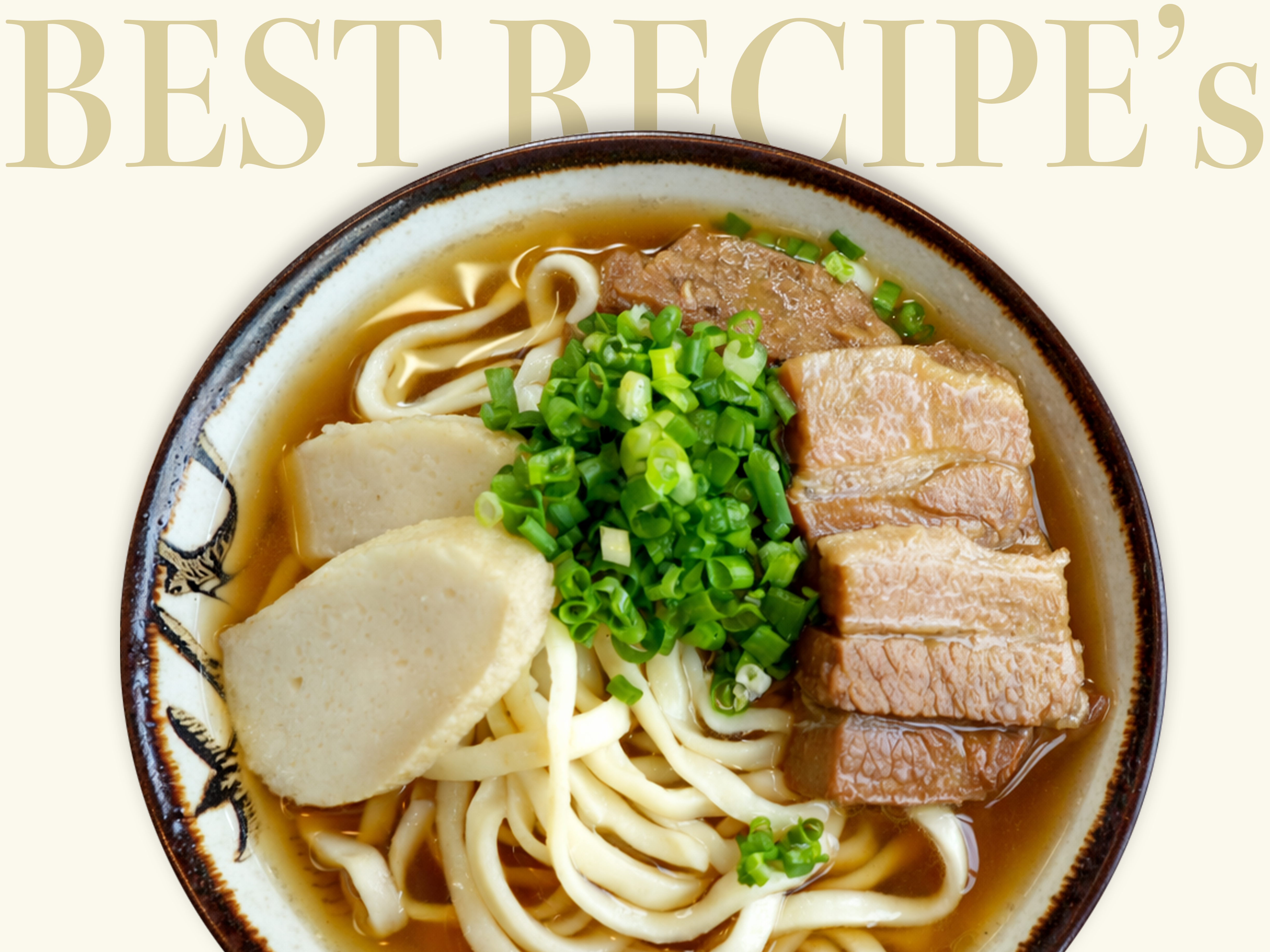
"Kishimoto Shokudo" - How to make Okinawa soba
Introduction
This is an introduction to a recipe that recreates Okinawa soba from Kishimoto Shokudo that represents Okinawa Prefecture.
The Okinawa soba at Kishimoto Shokudo is characterized by its bonito broth and Shoyu sauce-based soup. The broth is slowly simmered every morning, resulting in a rich bonito broth that fills your mouth with the aroma and Umami of the broth, making it a truly delicious bowl of noodles.
This is a recipe that uses commercial Ramen soup to easily recreate the taste of Kishimoto Shokudo 's Okinawa soba.
How to make Kishimoto Shokudo soup
Ingredients for Kishimoto Shokudo
Soup 1
・Water…6ℓ
・Soki (rib meat)...4kg
・Pork knuckles...500g
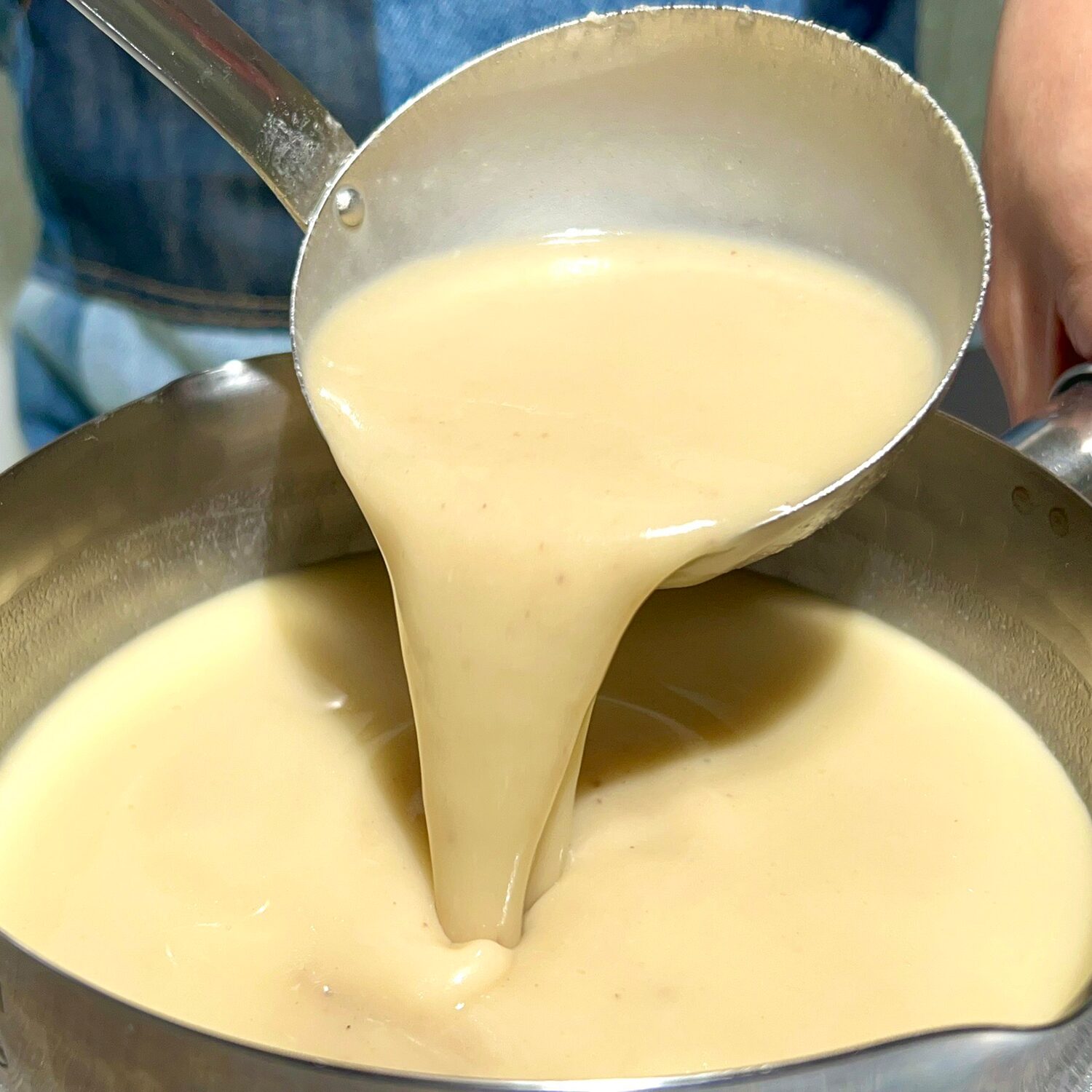
・ [Commercial Use] Pork Clear Soup (CP-BC6)... 1kg
Soup 2
・Water…6ℓ
・ Katsuobushi...350g
・ Dried shiitake...10g
・Dashi Kombu...50g
How to make Kishimoto Shokudo
- To make soup ①, simmer the pork ribs and pork knuckles over medium heat for 3 hours, then remove the pork ribs.
- Once the bones have been broken down, reduce the heat to low and cook until the base of the flavor is achieved. [For commercial use] Add frozen pork clear soup (CP-BC6) and dissolve over low heat.
- Once the frozen soup has thawed and the flavors have blended well, the soup is ready.
- To make soup 2, soak the ingredients for soup 2 in water for at least 3 hours to extract the stock.
- Add soup ② to soup ① and simmer over low heat for 1 hour.
A simple recipe to recreate "Kishimoto Shokudo"
👉 [Free Sample] "Kishimoto Shokudo" Replica Set Here>>
Ingredients (for 1 cup)
- [Commercial Use] Pork Clear Soup (CP-BC6)... 100cc
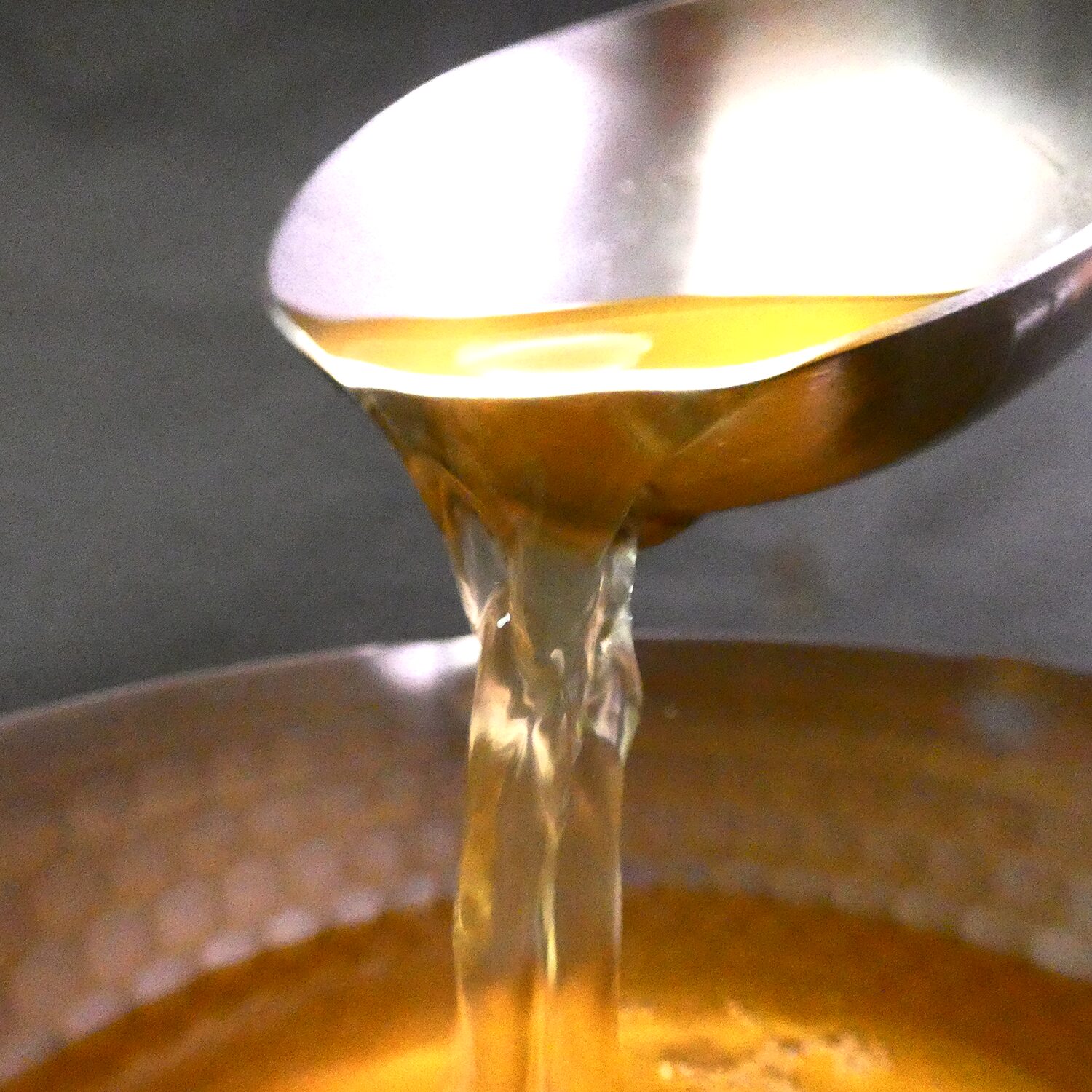
- 【業務用】鰹出汁パック…200cc
- [For commercial use]"Kishimoto Shokudo" Replica Kae-shi...35g
- Medium-thick noodles...1 ball
- [For business use] Kakuni (braised pork) pork …appropriate amount
- Green onion...appropriate amount
How to make it
- [For commercial use] Dissolve the pork clear soup (CP-BC6).
- Add one dashi pack to 2.5 liters of water and boil over medium heat for 20 minutes to make bonito stock.
- Combine pork clear soup and bonito stock.
- Add the soup and rice to the warmed bowl.
- Finally, add the noodles and toppings to complete the dish.
「きしもと食堂」再現サンプル
[Limited quantity] Free sample delivery for only 500 yen shipping!
For enquiries, please contact us below.
History and origins
The origins of Okinawa Suba are thought to lie in a Ramen shop that opened in Naha around 1902. The shop was founded by a Chinese person, probably from Fujian Province, and Chinese influences are evident in the recipe, which uses ash water. From there, it became common in Okinawa, where noodles were made by kneading Wheat Flour with ash water, boiling them, and coating them in oil.
By the way, in Fujian Province, noodles made by stretching and cutting dough made from ash water with Rolling Pin are called "kanmian," and the ash obtained by burning hardwood is used to make the noodles.
Initially, these noodles were simply called "suba," and the noodles made by people from Honshu, Kyushu, and Shikoku were called "Yamatosuba" and "Chinasuba." Around 1918, the government instructed them to call it "Ryukyusuba" to distinguish it from Honshu, and it came to be called simply "suba." The oldest Okinawan suba restaurant still in existence is Kishimoto Shokudo, which was founded in 1905. Originally, instead of brine, the clear liquid from charcoal made from burning banyan trees was used. This was called charcoal soba (mockai soba).
Another feature is that the noodles are boiled first and then coated with salad oil.
Furthermore, "Sokisoba" is said to have been born in Nago City around 1955, and "Gabusoka Shokudo", which was founded in 1966, launched it as a soki soba restaurant. It can be made with koregusu (spicy) or soki (fatty pork belly), or
Okinawa soba has Light taste taste and can be enjoyed by people of all ages and genders because it has no added ingredients.
There is also a theory that it was introduced from Fujian Province, China after the 14th century. This is because a group of 400 to 500 people who were planning to make the Ryukyu Kingdom a vassal state at the time stayed there for six to nine months and are said to have brought Chinese-style cuisine with them. Ramen is said to have been introduced to Yokohama Chinatown in the 1920s, but if Okinawa soba's roots lie in Fujian Province in the 14th century, it would be the oldest Ramen in Japan. In other words, soki soba, made with pork bone broth and topped with sanmainiku, may be the oldest Ramen in Japan.
Store Information
- Name of restaurant: Kishimoto Shokudo
- Address: Toguchi 5, Motobu-cho, Kunigami-gun, Okinawa Prefecture
- Business hours: 11:00-17:30 (closes when sold out)
- Closed: Wednesdays
*Business hours and holidays may change, so please check with the store before visiting.
Would you like to increase your average customer spend?
Popular Ramen ingredients
Why not try another ingredient that will increase your average customer spend?
Others also viewed this recipe
Others also viewed this soup recipe
Precautions
*Created by Nishio Ryoichi as an homage to Kishimoto Shokudo.
*This recipe is for reference only. It aims to have a similar taste, but may differ from the original recipe of "Kishimoto Shokudo."
References
■ Title: "Ramen Encyclopedia"
■Author: Ryoichi Nishio
■Publisher: Asahiya Publishing Co., Ltd.