[Perfect Reproduction] A recipe that recreates the taste of "Mito-han Ramen" with a professional touch
 Fumiaki Hokazono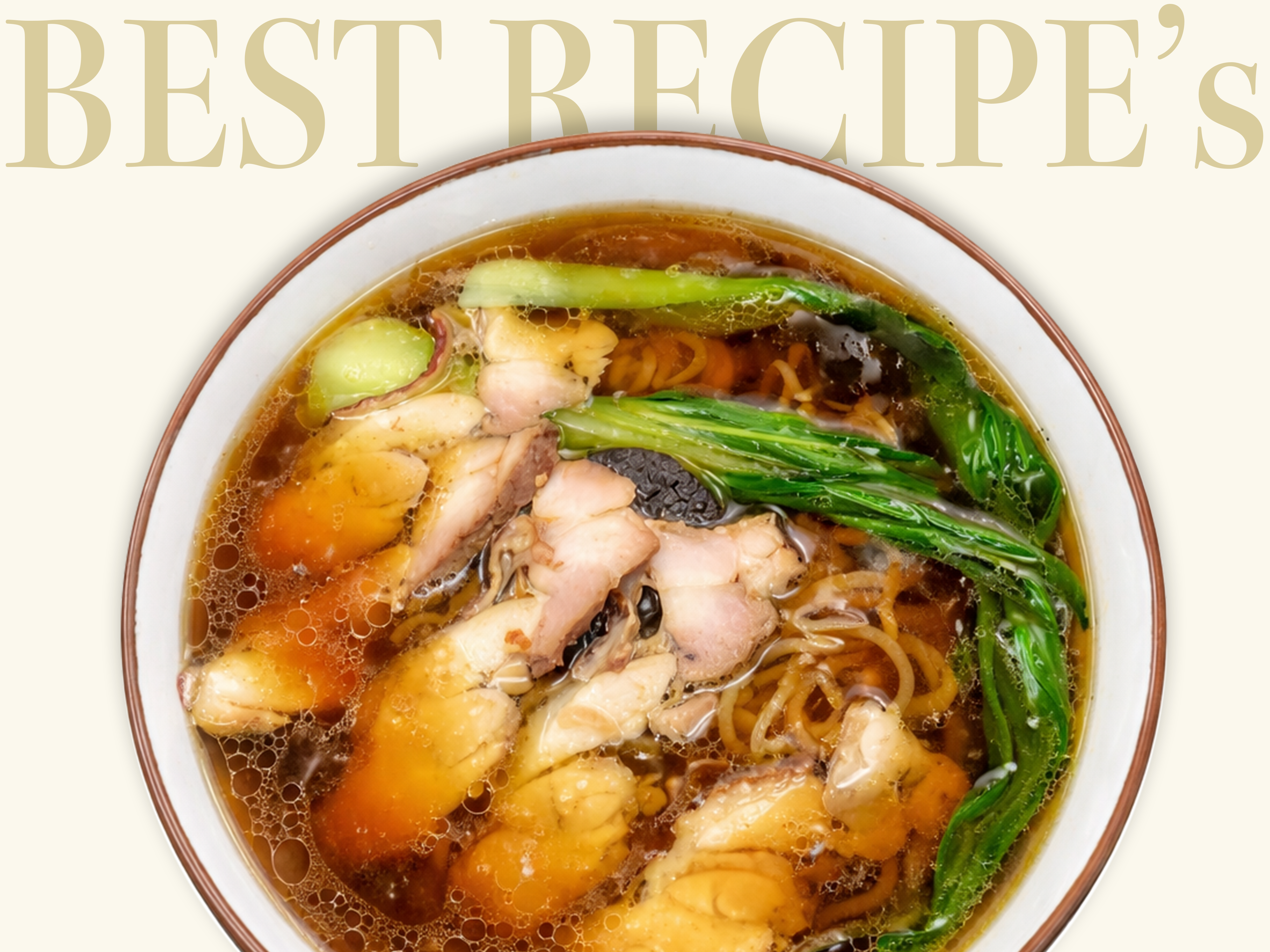
How to make a reproduction of "Mito-han Ramen
Introduction
The following is a recipe for Mito-han Ramen, a reproduction of a typical "Gotochi Mian" (local rice noodle) from Mito City, Ibaraki Prefecture, Japan.
The "Gotochi Mian" Mito-han Ramen is characterized by kneading lotus root flour into the noodles and adding chives, rakkyo, green onions, Garlic and Ginger, and a condiment called "Goshin". The taste varies from restaurant to restaurant, but the basics remain the same. The soup is Light taste clear and golden in color, and the condiments make you feel warm.
This recipe uses commercial Ramen soup to easily reproduce the taste of Mito-han Ramen the "Gotochi Mian" (local rice noodles).
How to make "Mito-han Ramen"
Ingredients for Mito-han Ramen
・Water...10 liters
・Chicken thighs...2kg
・Hot thigh (also known as Chinese ham; salted pork thigh) - 5kg
・ [Commercial Use] Pork Clear Soup (CP-BC6)... 2kg
How to make Mito-han Ramen
- Boil the chicken and thighs in boiling water for 2-3 minutes to Blood removal, then immediately remove and rinse under running water.
- Place the drained blood chicken and thighs in a pot and simmer over low heat for 4 hours.
- By carefully removing the scum that appears during the process, you can reduce strange odors and unpleasant flavors.
- If the soup Evaporation and reduces during cooking, add water to make up for the loss and return it to its original volume.
- Once the flavor of the meat has dissolved into the soup, it becomes the base of the flavor. [For commercial use] Add frozen pork clear soup (CP-BC6) and dissolve over low heat.
- Once the frozen soup has thawed and the flavors have blended well, it is ready.
A simple recipe for "Mito-han Ramen"
👉 [Free Sample] "Mito-han Ramen" Reproduction Set Here>>
Ingredients (for 1 cup)
- 【業務用】豚清湯スープ(CP-BC6)…100cc
- [Commercial use] Chicken clear soup (CP-TC4)... 100cc
- [For commercial use] "Mito-han Ramen" Replica Kae-shi (base seasoning)...43g
- [For commercial use] Thin curly noodles...1 ball
- [For commercial use] Chicken thigh char siu...appropriate amount
- Bok choy…appropriate amount
- Minced garlic...appropriate amount
- Green onion...appropriate amount
How to make it
- Dissolve the [Commercial Use] Chicken Clear Soup and [Commercial Use] Pork Clear Soup.
- Combine pork clear soup and chicken clear soup.
- Pour the soup mixed with the seasoning into the warmed bowl.
- Add the noodles and toppings and it's done.
「水戸藩ラーメン」再現サンプル
[Limited quantity] Free sample delivery for only 500 yen shipping!
For enquiries, please contact us below.
History and origins
There is a theory that Tokugawa Mitsukuni (Mito Komon), the lord of the Mito domain during the Edo period, was the first person in Japan to eat Ramen, and this piece recreates that story. It is believed that Ramen was one of the things he learned from a Confucian scholar named Zhu Shunshui, who fled from the Ming Dynasty in China. The two first met in July 1665, so it is likely that this was shortly after that.
Mitsukuni, who had always loved udon noodles, made some and treated Shu to them, and it is said that she returned the favor by making flat noodles.
The noodles are kneaded with lotus root powder called ou huen, and Ramen soup is made with hot thighs. It is said that the Ramen was served with five spicy condiments, including chives, scallions, green onions, Garlic, and Ginger, which were often used in Chinese noodle soups, and so it is said that he was the first Japanese person to eat Ramen.
However, because Mitsukuni liked vegetarian cuisine and there is no record of lotus root flour being used in Chinese noodles, there is a strong theory that it was Ramen.
Would you like to increase your average customer spend?
Popular Ramen ingredients
Why not try another ingredient that will increase your average customer spend?

Others also viewed this recipe
Others also viewed this soup recipe
Precautions
*Created by Nishio Ryoichi as an homage to "Mito-han Ramen."
*This recipe is for reference only. It aims to have a similar taste, but may differ from the authentic "Mito-han Ramen" recipe.
References
■ Title: "Ramen Encyclopedia"
■Author: Ryoichi Nishio
■Publisher: Asahiya Publishing Co., Ltd.